
 Available in US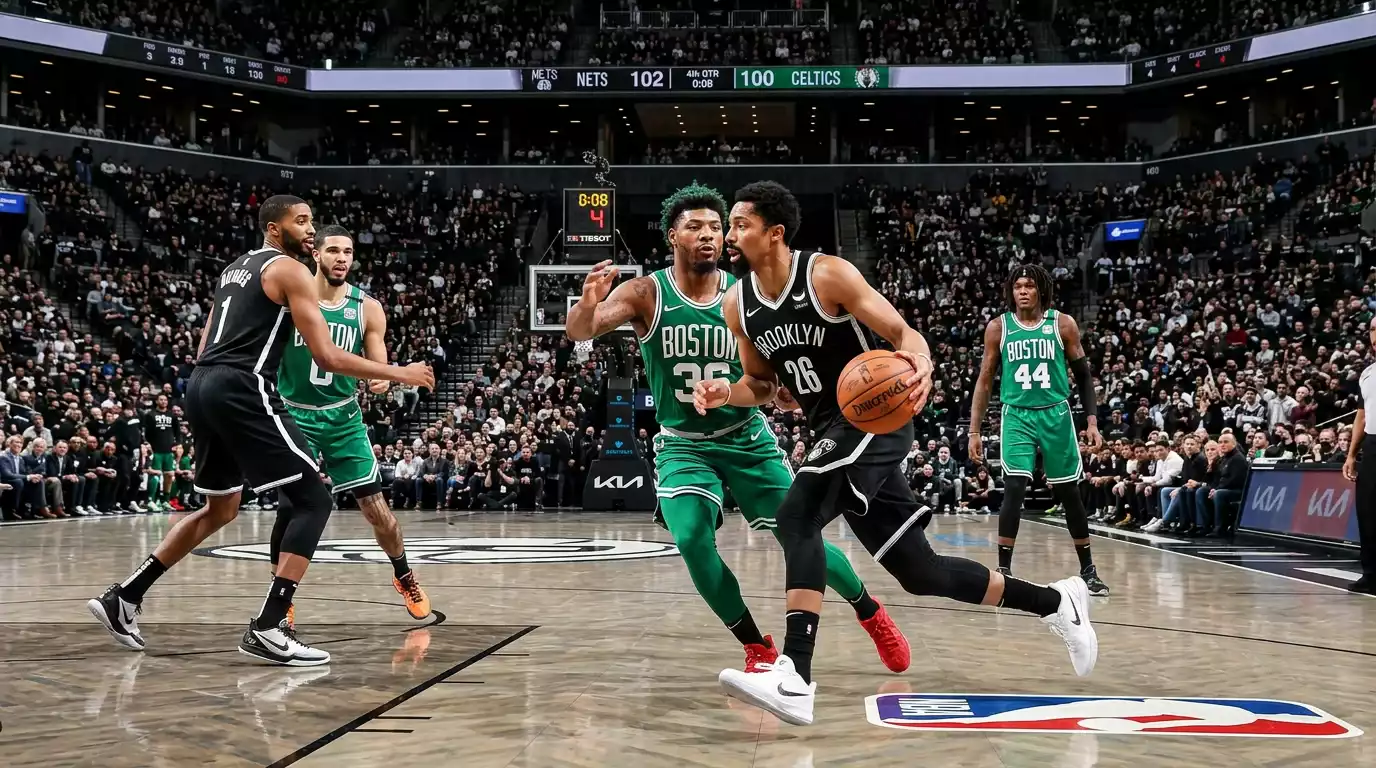
Traditional sports betting has always meant betting before the whistle blows — place your wager, then watch and hope. That model dominated for decades. But as gambling law expert I. Nelson Rose observed, in-game betting developed in England and, once allowed by regulators in the US, caught on quickly. Today, more than half of all sports bets are placed during games rather than before them.
Live betting transforms passive spectating into active engagement. Every possession, every run, every momentum shift creates new betting opportunities with constantly updating odds. The Celtics trail by 12 at halftime? Their live spread might sit at +4.5 compared to their pre-game -6.5. That 10-point swing represents exactly the kind of opportunity live bettors hunt.
For UK punters, live NBA betting carries unique considerations. Games tip off at inconvenient hours — late evening through early morning in British time. The 95% of UK gambling that happens from home includes many bettors watching games on their phones while half-asleep. These conditions affect decision-making in ways that demand awareness and preparation.
The appeal of live betting extends beyond profit potential. Watching basketball becomes more engaging when you have skin in real-time developments. That contested three with two minutes left matters more when your live spread hangs in the balance. For many bettors, this enhanced engagement is worth the additional complexity.
This guide covers everything UK bettors need to capitalise on in-play NBA markets, from understanding how live odds work to building strategies that exploit real-time information edges.
How NBA Live Betting Works
I placed my first live bet during a playoff game five years ago. The favourite fell behind by 15 points in the first quarter, and their live spread shifted from -7.5 to +6.5. I grabbed them at plus-money, they stormed back to win by 8, and I was hooked. That experience taught me how dramatically live odds can shift based on game state.
Live betting markets update continuously throughout games, with odds recalculating after every significant event. A made three-pointer, a turnover, a foul call — each changes the probability distribution of final outcomes, and bookmaker algorithms adjust accordingly. The speed of these updates varies by platform, but modern systems recalculate within seconds.
Unlike pre-game markets where you have hours to analyse and decide, live betting demands quick decisions. Odds you see at one moment might not exist thirty seconds later. A timeout called after a big run often triggers significant line movement. Hesitation costs opportunity in ways that pre-game betting never does.
Bookmakers manage risk differently for live markets. They often limit maximum bet sizes more aggressively than pre-game, particularly on sharp bettors whose live action suggests edge. If you find yourself getting reduced limits on live bets, the bookmaker has flagged you as potentially profitable — take it as a compliment while acknowledging the practical limitation.
The information asymmetry in live betting creates both opportunity and risk. Bettors watching the game see developments before bookmaker algorithms fully price them. But algorithms process betting patterns, historical data, and situational probabilities faster than humans. The question is which information advantage dominates in specific moments.
Live markets remain open during play but often suspend briefly during dead balls, timeouts, and quarter breaks. These pauses allow bookmakers to reassess and reset lines. Some of the best live betting opportunities come immediately after markets reopen following these pauses, before fresh betting action moves lines.
Live Betting Markets for NBA Games
The variety of live markets has exploded beyond simple game outcomes. Modern platforms offer dozens of in-play options, each with distinct characteristics and potential edges. Knowing what is available helps you identify where your analysis provides advantage.
Live spread betting mirrors pre-game spreads but adjusts for current score differential and remaining time. If the pre-game spread was -6.5 and the favourite leads by 10 midway through the third quarter, the live spread might sit around -3.5 depending on pace and momentum assessment. The spread compresses as the game progresses and lead changes become less likely.
Live moneylines update based on win probability models. A team trailing by 8 with five minutes remaining might be +200 on the live moneyline, while a team trailing by 8 with five seconds remaining might be +10000. The time component drives these calculations as much as the score differential does.
Live totals present unique opportunities. A low-scoring first half might drop the live game total significantly, creating overs value if you expect second-half pace to accelerate. Conversely, an explosive first quarter might inflate live totals beyond reasonable second-half expectations, creating unders value.
Player props often remain available live, though with adjusted lines. A player who scores 15 points in the first half might see his full-game points line shift from 24.5 pre-game to 29.5 live. Whether that adjusted line offers value depends on your projection for his remaining minutes and opportunity.
Next basket, next team to score, and next player to score represent rapid-fire live markets with immediate resolution. These markets carry higher juice due to their frequency and randomness, but they appeal to bettors seeking constant action. I avoid them personally — the edge is nearly impossible to establish, and the high frequency invites chasing behaviour.
Quarter and half markets become available as the game progresses. Third quarter spreads, second half totals, and similar segmented markets let you bet on specific portions of remaining action. These can offer value when your game-state read differs from the bookmaker’s automatic adjustments.
Live Betting NBA from the UK: Timing Considerations
The 7:30 PM Eastern tip-off translates to 12:30 AM in London. That timing reality shapes UK-based NBA live betting in ways that American bettors never consider. Nearly all of your live betting happens when you should probably be sleeping.
Home-based betting dominates in the UK — 95% of online gambling happens from the house rather than in betting shops or public venues. For NBA live betting, that means late-night sessions on your sofa or in bed, often with a phone rather than a desktop setup. The environment affects decision quality in subtle ways.
Mobile betting has become the default, particularly among younger bettors. Among UK punters aged 18-24, 76% use mobile phones for gambling. Mobile interfaces work fine for pre-game bets but can feel clunky for live betting where speed matters. If your primary device is a phone, ensure the app loads quickly and bet placement requires minimal taps.
Fatigue affects judgment. Betting on West Coast games that tip off at 3 AM UK time means making decisions when your cognitive function is impaired. I have learned the hard way that my late-night live bets perform worse than my early-evening live bets. Consider setting personal rules about when to stop betting regardless of game availability.
Weekend matinees offer UK-friendly timing. Saturday and Sunday afternoon games in the US translate to late evening in Britain — much more reasonable hours. Structure your live betting focus around these accessible windows rather than grinding through multiple late-night sessions.
Time zone awareness extends to injury news and lineup announcements. Information that breaks at 6 PM Eastern reaches UK bettors at 11 PM. If you are not actively monitoring during those hours, you might miss market movements that early bettors exploit. Decide whether comprehensive coverage justifies the schedule disruption.
Reading Game Flow and Momentum
Watch enough basketball and you develop an intuition for momentum shifts. The crowd energy changes. Body language shifts. One team suddenly cannot miss while the other looks lost. These real-time observations form the foundation of live betting edge — seeing what the algorithms quantify imperfectly.
NBA runs happen constantly. A team that trails by 12 can lead by 4 ten minutes later without anything structurally changing. These scoring runs create dramatic live line swings that often overcorrect. A team on an 18-4 run looks unstoppable in the moment, but regression is coming. Live odds during runs tend to overweight recent possessions and underweight full-game probability.
Timeout analysis matters. Coaches call timeouts to disrupt opponent momentum, adjust strategy, or rest players. The effectiveness of these stoppages varies by coach and situation. Some coaches consistently settle their teams after timeouts; others watch momentum continue post-break. Track these patterns for coaches you bet regularly.
Foul trouble creates live betting opportunities. A star player picking up his fourth foul early in the third quarter might sit for extended minutes, fundamentally changing the game’s trajectory. Live lines adjust when stars leave the floor, but the adjustments sometimes lag or overshoot actual impact.
Rotation patterns inform live projections. Most teams run predictable substitution sequences. Knowing when bench units enter helps anticipate scoring pace changes. A team’s bench might play faster or slower than starters, affecting live totals. Similarly, defensive intensity often drops with second units, creating scoring opportunities.
The fourth quarter operates differently than earlier periods. Trailing teams push pace; leading teams milk clock. These strategic shifts affect both spreads and totals in predictable ways. Live lines in the fourth quarter should be evaluated through the lens of expected game state behaviour, not just current score.
Injury mid-game creates immediate opportunity. When a starter heads to the locker room, live lines adjust — but how quickly and how accurately? Sometimes the market overreacts to a star’s exit; sometimes it underreacts. Your read on the player’s importance and the team’s depth determines whether the adjusted line offers value.
Three-point shooting variance dominates single quarters. A team that hits 7 of 8 threes in the third quarter is probably due for regression. Live totals and spreads may not fully account for this expected shooting normalisation. Watching shot quality rather than just makes and misses helps anticipate when regression is imminent.
Live Betting Strategies for NBA
Fading the leader after big first quarters has produced consistent results across years of tracking. A team that jumps out to a 15-point lead in the first quarter often sees their live spread inflate beyond sustainable levels. League parity means underdogs cover spread more frequently than historical averages suggest — and this applies in live betting as forcefully as pre-game.
The overreaction to early scoring creates systematic opportunity. Bookmakers’ algorithms weight recent possessions heavily, producing live lines that overcorrect for short-term variance. A team shooting 60% from three in the first quarter will regress. A team shooting 25% will improve. Mean reversion is powerful, and live markets frequently misprice it.
Live unders after high-scoring first halves exploit a similar dynamic. Two teams combining for 130 points in the first half rarely maintain that pace. Fatigue sets in, defences adjust, and fourth-quarter grind replaces first-half flow. If the live total after a 130-point first half sits at 255, the under often offers value that the full-game total at 226 did not.
Hedging pre-game positions works in both directions. Bet the favourite pre-game at -6.5, watch them fall behind by 10, and you might find them at +4.5 live. Taking the live underdog creates a middle opportunity — if the favourite wins by 1-4 points, both bets cash. Even without middling, the live hedge locks in profit or limits loss depending on game outcome.
Garbage time creates predictable scoring patterns. When the game is effectively decided with five minutes remaining, starters rest and benches play. Trailing teams often close gaps against benches that play relaxed defence. These late-game runs rarely threaten actual outcomes but affect spreads and totals. Bet accordingly when garbage time approaches.
Trust your pre-game analysis. If you liked a team at -4.5 before the game and they fall behind 8-0 to start, your analysis has not been disproven. Early variance is noise. The live line at -1.5 or even +1.5 might offer better value than your original position. Doubling down on conviction at improved numbers can enhance expected value, though it increases variance and exposure.
Technical Setup for Live Betting
Internet reliability separates successful live bettors from frustrated ones. A connection that freezes during a crucial momentum shift means missing opportunities or, worse, having bets processed at stale odds. Invest in stable connectivity before committing to serious live betting.
Multiple bookmaker accounts provide essential flexibility. Live odds vary across platforms more than pre-game odds because each bookmaker’s algorithm responds differently to game events. Having three or four accounts lets you grab the best available number quickly. When seconds matter, switching apps beats waiting for line improvements.
Stream quality affects information advantage. Broadcast delays typically run 15-30 seconds behind real-time. Bettors watching official streams might see a made three-pointer 20 seconds after it happened — after live lines have already adjusted. Faster feeds exist but often require premium subscriptions or alternative sources.
Pre-load your betting apps before games begin. Having accounts logged in, deposit balances confirmed, and bet slips ready to populate saves precious seconds. The difference between placing a bet in 5 seconds versus 30 seconds often means catching a favourable line versus missing it entirely.
Consider dedicated devices. A tablet for watching the game and a phone for betting prevents the toggle that mobile viewing requires. This setup lets you watch continuously while placing bets without interrupting your game read. The investment pays dividends in reduced friction and improved execution.
Stat feeds supplement visual observation. Real-time statistics platforms show pace data, shooting percentages, and lineup impacts that broadcast commentary often ignores. Integrating statistical information with visual observation creates a fuller picture of game state than either source alone.
Managing Live Betting Risks
Chasing losses destroys live bettors faster than any other behaviour. The continuous availability of new betting opportunities makes chasing almost irresistible. Your pre-game bet loses in the second quarter, and suddenly you are hammering live bets trying to recover. This path leads to empty bankrolls and genuine harm.
Set session limits before games begin. Decide how much you are willing to risk on live betting for a specific game, and stop when you hit that limit regardless of game state. Pre-commitment works because it removes in-the-moment decisions when emotional regulation is weakest.
The 47% of UK adults who participate in some form of gambling include many who struggle with control. Live betting’s constant stimulation can trigger problem gambling behaviours more readily than weekly pre-game betting. If you find yourself unable to stop mid-session, seeking support from GambleAware or similar resources is a strength, not a weakness.
Emotional betting spikes during live action. Watching your team blow a lead triggers frustration that clouds judgment. Watching a big run against you provokes revenge betting instincts. Recognise these emotional triggers and build in cooling-off periods. Walking away from the screen for five minutes often prevents regrettable bets.
Track live betting results separately from pre-game results. Many bettors discover their live betting loses money even when pre-game betting profits. The different skill sets, time pressures, and emotional contexts produce different outcomes. Honest tracking reveals whether live betting helps or hurts your overall profitability.
Sleep deprivation compounds all these risks. Late-night live betting on West Coast games means impaired decision-making for many UK bettors. If you notice your live betting results deteriorating as the night progresses, consider whether the action is worth the cost. Sometimes the best live bet is no bet at all.
Live Betting FAQ
Making Live Betting Work for You
Live betting demands a different skill set than pre-game wagering. Quick decisions replace deliberate analysis. Emotional control becomes paramount when every moment offers new action. Technical setup matters in ways that pre-game betting never requires. Succeeding at live betting means mastering these distinct challenges.
Start with observation before action. Watch several games while tracking live line movements without betting. Develop intuition for how odds respond to game events. Notice when lines seem to overcorrect and when they lag behind obvious developments. This observation period builds pattern recognition that informs actual betting later.
Focus on specific situations rather than betting constantly. Perhaps you excel at identifying halftime adjustments or recognising when early shooting variance is unsustainable. Specialising in particular live betting spots concentrates your edge rather than diluting it across random opportunities.
Integrate live betting with your pre-game positions. Use live markets to enhance pre-game analysis rather than as standalone gambling. If your pre-game research identified value, live betting can double down at improved numbers or hedge when circumstances change. This integration creates coherent strategy rather than fragmented action.
For detailed analysis of player prop markets that you can apply during live betting, our props guide covers the research fundamentals.
Protect your bankroll and your wellbeing. Live betting can be exhilarating, but it can also become compulsive. Set firm limits, track results honestly, and walk away when sessions go poorly. The games will be there tomorrow. Your bankroll and mental health need to be there too.
The edge in live betting goes to those who combine game knowledge with emotional discipline and technical readiness. Cultivate all three, and live markets become a profitable extension of your basketball betting. Neglect any one, and live betting becomes an expensive entertainment at best.
Articles
Prepared by the betusnba_com editorial staff.
